Gardening Services Regents Park — Recycling and Sustainability
 Gardening Services Regents Park is committed to creating an eco-friendly waste disposal area and a sustainable rubbish gardening area that complements the green character of the park and surrounding boroughs. Our approach balances practical garden clearance with circular-economy thinking: we separate materials on-site, minimise landfill, and prioritise reuse and composting. The service is designed to fit local boroughs' approach to waste separation — accepting green waste, clean wood, compostable material and carefully segregated recyclables — while matching the specific needs of Regent's Park residents and community spaces.
We set a clear recycling percentage target to measure our progress and encourage continuous improvement. Our current aim is a 75% recycling and diversion rate of garden waste and associated materials within 12 months of implementation, rising to 85% in the following three years. This target covers green waste, branches and timber, soil reuse, and salvaged plant pots and containers. By tracking the percentage of diverted material, we can demonstrate reductions in landfill use and lower embodied carbon from transporting and processing waste.
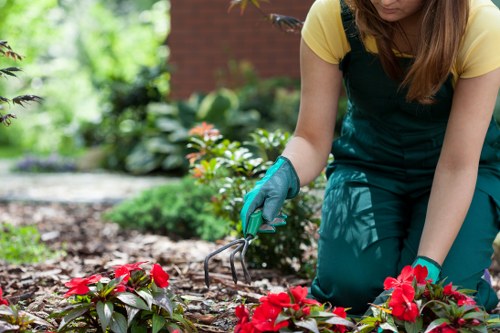 On-the-ground separation is integral to meeting our goals: crews arrive with clearly labelled bins for green waste, mixed recycling and non-recyclable residue, often finishing light segregation at client sites to match borough rules. We work with local transfer stations and processing facilities to ensure material goes to the correct stream. Where possible, clean woody waste is chipped and returned as mulch for planting beds, and suitable soil is screened and reused locally to support healthy topsoil in the park and neighbouring gardens.
Local transfer stations and sustainable routes
Proximity matters: partnering with nearby transfer stations reduces vehicle miles and maximises material quality. We coordinate with borough-approved transfer stations and licensed composting facilities that accept garden waste for aerobic processing and anaerobic digestion where appropriate. That means fewer lorry journeys and quicker turn-around for materials to become usable compost or mulch. Our routing plan prioritises low-emission runs and consolidation of loads to avoid partial trips and unnecessary carbon output.Our operations explicitly support the boroughs' approach to waste separation. We comply with local collection standards — segregating green waste, dry recycling and any food-caddy items where requested — and we adapt to changes in municipal policy. This alignment allows us to integrate with municipal services, making the eco-conscious garden rubbish disposal process seamless for clients while ensuring materials are handled according to the best available environmental practice.
Partnerships with charities and resource reuse
We maintain active partnerships with local charities and community groups to extend the life of useful garden items. Salvageable items such as intact plant pots, garden furniture in good condition, planters and even small tools are offered to community gardening projects and charity networks rather than disposed of. These collaborations not only reduce waste but create local social value: donated items support school gardening schemes, community allotments, and park volunteer groups. Partnering with charities also helps us increase the overall reuse rate and supports our recycling percentage target. Low-carbon transport and logistics are central to minimising the environmental footprint of our gardening rubbish disposal. Our fleet includes electric and hybrid vans and, where feasible, cargo bikes for small jobs within the park and immediate local streets. These low-emission vehicles reduce noise and air pollution, and when coupled with consolidated routing and load planning they significantly lower CO2 per tonne of material moved compared with traditional diesel-only fleets.
We also operate an internal policy of reducing contaminant loads: crews are trained to avoid mixing non-recyclable waste with compostable green waste, because contamination can downgrade entire loads and force landfill disposal. Simple on-site decisions — such as keeping plastic pots separate from woody waste and ensuring soil is free from foreign debris — contribute to higher-value recycling outcomes and allow transfer stations to process material more efficiently.
Practical recycling activities we carry out include chipping branches for mulch, screening and reusing topsoil, segregating metals and terracotta for recycling, and stacking clean wood for biomass or local processing. Our teams also collect and isolate small volumes of inert rubble when garden improvements include paving or edging replacement, ensuring those materials are taken to appropriate inert-waste processors rather than mixed into organic streams.
 Monitoring and transparency are built into every job: customers receive a short job report that summarises what was diverted, what was donated, and the estimated percentage of material recycled that day. These reports help us track progress versus our recycling target and allow clients to see the environmental benefit of choosing a service optimised for an sustainable rubbish gardening area approach rather than standard disposal routes.
We continuously review our supplier network and charity partners to ensure we send materials to the best possible reuse or recycling destination. Regular audits of transfer station partners, route efficiency checks and fleet electrification timelines are part of our sustainability plan, helping us meet the ambition of a high-diversion, low-carbon garden waste service for Regents Park and nearby communities.
In summary, Gardening Services Regents Park offers an integrated, locality-aware programme focused on an eco-friendly waste disposal area and a resilient sustainable garden rubbish disposal model: ambitious recycling targets, practical on-site segregation, partnerships with charities for reuse, cooperation with local transfer stations and a low-carbon vehicle fleet all combine to keep Regent's Park green and thriving.